Fleet APAC 2026 Wrap-Up: How AI Is Unifying Fleet Maintenance Across the Region
.jpg)

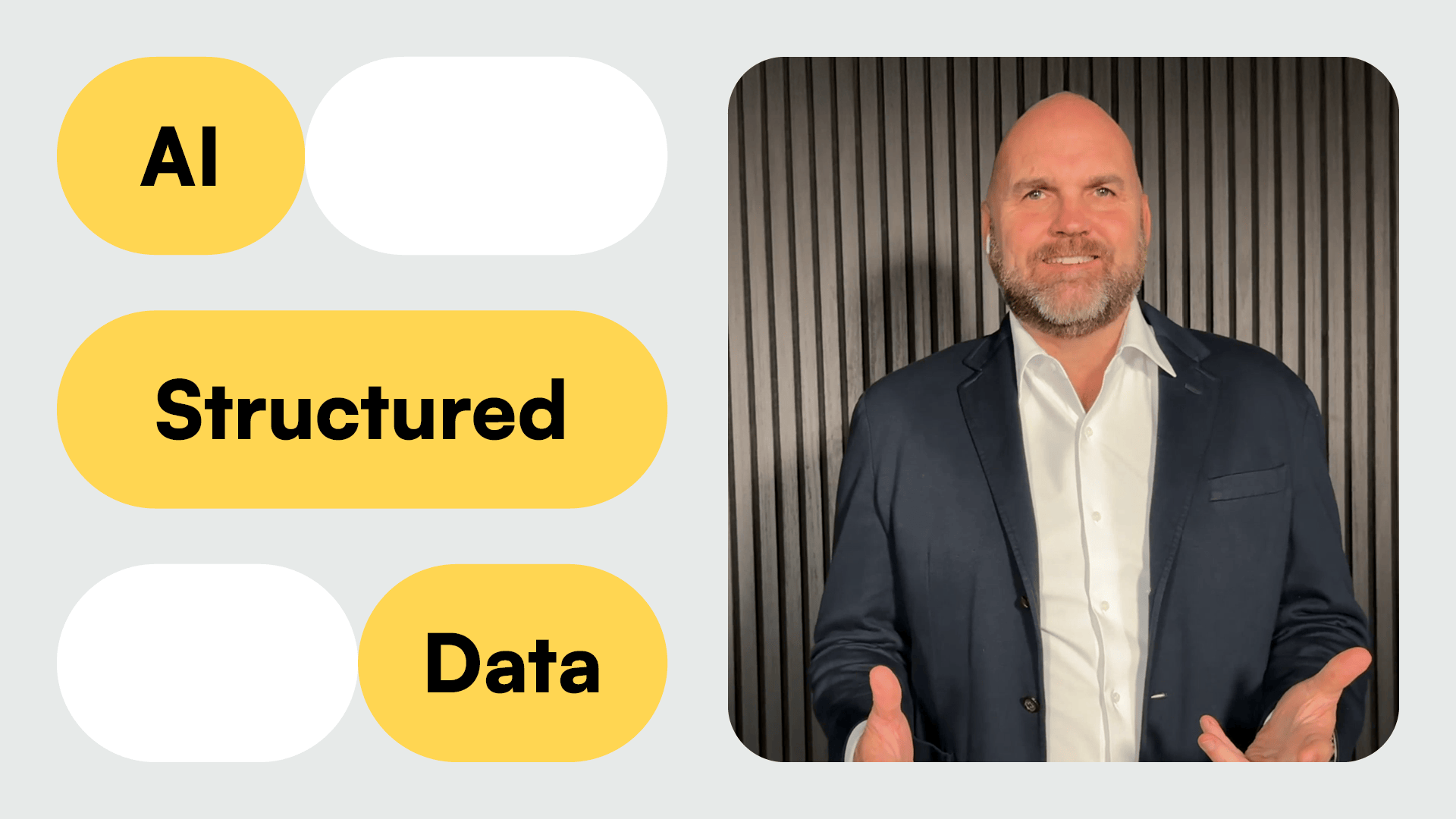
When Eden Shirley, Founder and Managing Director of FleetGuru.ai, took the stage at Fleet APAC 2026, he warned the audience that live AI demos are "a high-risk game." What followed was a candid, hands-on tour of how layered AI technologies can unify fleet maintenance across a region as complex and fragmented as Asia-Pacific and, occasionally, a reminder that even the best demos can trip on a shaky internet connection.
His premise: every vehicle, in every country, shares a common thread, a plate, a VIN, and manufacturer service data. That's the universal language of fleet. The challenge has never been the data itself, but the fact that it arrives in dozens of formats, languages, and channels. AI, he argued, is the translator that makes it all speak as one.
Setting The Scene: From Plate To Price
Shirley walked through the chain that makes automated maintenance possible. Every plate can be resolved to a VIN, and every VIN to what FleetGuru calls a MID code (model ID). That model ID is the key that unlocks manufacturer service and repair data: scheduled maintenance by distance and time, inspections, repair procedures for every major system, body and system data for airbags, electrical systems and ADAS, diagnostic workflows including DTC codes, and wiring diagrams.
This information, he stressed, is universal. There are variant models and procedures across countries, but the underlying structure holds everywhere.
To put scale on it, Shirley shared FleetGuru's Australia and New Zealand dataset: 46,000 MID codes, each carrying somewhere between 150 and 300 maintenance or repair operations. That works out to a dataset of roughly 6.5 to 14 million unique service and repair tasks, each with an associated labour time.
The insight that ties it together: if you know what needs to be done and how long it takes, you only need a repairer's agreed fleet rate, parts costs, and any agreed markups to calculate the cost of any service or repair in real time without a human in the loop.
The Maintenance Operations Problem
Shirley was quick to note that the process is more complicated than it first appears. A vehicle coming out of service moves through a long chain. Identify the asset class, identify the vehicle via registration, pull configuration and build data, then decide whether the work is scheduled maintenance or an unplanned repair triggered by a DTC code, a reported symptom, or an inspection.
From there, the system selects the required services, estimates procedure times, adds OEM or aftermarket parts and consumables, and generates a quote. That quote is then run through digital scrutiny and business rules from the fleet management company, approved automatically where possible, or escalated to human review when it's more complex. Once approved, the work is done, time sheets and compliance reports are updated, and the cycle closes out with invoicing, warranty claims, repairer payment, and any tax or client on-charges.
Structured Vs. Unstructured Data — And Why AI Changes The Game
The hardest part in a region like APAC, Shirley explained, is the gap between structured and unstructured data. Unstructured data is human voice, a phone call, an invoice, an email, or a text message. Every service provider and every fleet runs different software, and traditional computer systems struggle to read this nuanced, context-heavy, duplication-prone input.
Structured data, by contrast, is controlled, organised, and formatted into a predefined schema. It's searchable and delivers consistent, repeatable outcomes.
AI's transformative power, in Shirley's framing, is its ability to read and interpret unstructured data, extract the human context, and deliver meaningful results. But there's a catch he was refreshingly honest about: ask an LLM the same question three different ways and you'll get three slightly different answers, unacceptable in operations as critical as fleet maintenance and compliance.
The solution is RAG-enabled AI. Combining the intelligence and context of an LLM with controls that make outcomes predictable, repeatable, and accurate. Unstructured input goes in, gets understood in context, and comes out as a reliable, repeatable result.
Meet Mic, The Maintenance Co-Pilot
On top of a substantial dataset, 46,000 model variants, over 11 million repair operations, over 100,000 tracked parts, plus FleetGuru's historical record of 3.2 million authorised quotes, 2 billion part price changes, and 180,000 labour rate changes. FleetGuru built a service agent named Mic, the Maintenance Intelligent Co-pilot.
Shirley introduced Mic live on stage. Describing himself as the "nerdy data guy" on the fleet team, Mic outlined his four core jobs: calculating service and parts pricing models, analysing maintenance quotes and controller approvals, providing vehicle maintenance history insights, and approving work orders where the rules allow.
In the first live demo, Shirley played a service provider phoning in a job. From a voice conversation, Mic confirmed the plate, identified the vehicle as an Isuzu Ute MU-X, gathered the missing details, priced the work, and submitted it for authorisation then repeated the feat in Japanese and French. Mic, Shirley noted, speaks 77 languages.
In the second demo, Eden played a fleet manager overseeing 850 vehicles. Mic surfaced 12 outliers in the review queue, a brake pad above the peer median, a labour line running long, a refrigeration repair 30% over benchmark and estimated roughly $400 of total exposure across the 12, all while ignoring the auto-approved jobs entirely. Scale that from 850 vehicles to a million, and the value becomes clear.
The Bigger Vision
Pulling the threads together, Shirley described stitching multiple technologies into one stack. Multilingual voice tech, LLMs, RAG-enabled data, and integrations back into structured databases. The multilingual reach is striking, with coverage of 92% of Asia, including 13 Indian dialects, plus major European languages like Portuguese and Spanish that dominate Latin America.
Citing a large Fleet.io study, Shirley noted the top two pressures on fleet managers are rising costs and regulation and compliance, which are consistent worldwide. His argument, turning manual, localised, team-based maintenance into structured data, lets AI attack both problems through better cost control and cross-border visibility.
He sees "multilingual scribe technology" as a way to improve scalability, desirability, and profitability for the world's biggest fleet management companies. By translating unstructured processes into structured service, maintenance and repair (SMR) data, AI eliminates the language and local friction that normally forces companies to build maintenance teams in every new market.
Shirley drew a parallel to the tourism industry he came from, where centralised booking hubs in Malaysia and the Philippines transformed operations across APAC, hinting at a similar paradigm shift for centralised fleet maintenance hubs. On automation, he reported current auto-approval rates averaging 35%, with some customers reaching 70%, driven by the confidence that comes from knowing what a job should cost and comparing it against the peer median.
FleetGuru is already building the dataset to extend its Australia and New Zealand model into Japan. In this market, vehicle overlap is lower than expected, thanks to grey imports.
The Human Stays In The Loop
Asked which fleet management role would disappear entirely as AI agents evolve, Shirley's answer was firm, none, at least not the humans. "The human is the trust layer," he said. "You can't sue the code." Fleets are complex, high-value, high-risk asset pools, and the question isn't whether people stay involved, it's whether a single person can manage a thousand vehicles or a hundred thousand.
For Eden, this is about scaling human capacity rather than replacing it, especially as labour forces contract in markets like Japan. He offered himself as proof. Rather than cutting staff, he's doubled his team, is spending twice as much on them, and is getting two to three times more done than a year ago. AI, in his telling, isn't the boogeyman coming for jobs, it's the tool that lets a growing industry keep pace.