Eden Shirley's Live AI Demo Steals the Show at Fleet APAC 2026
.jpg)

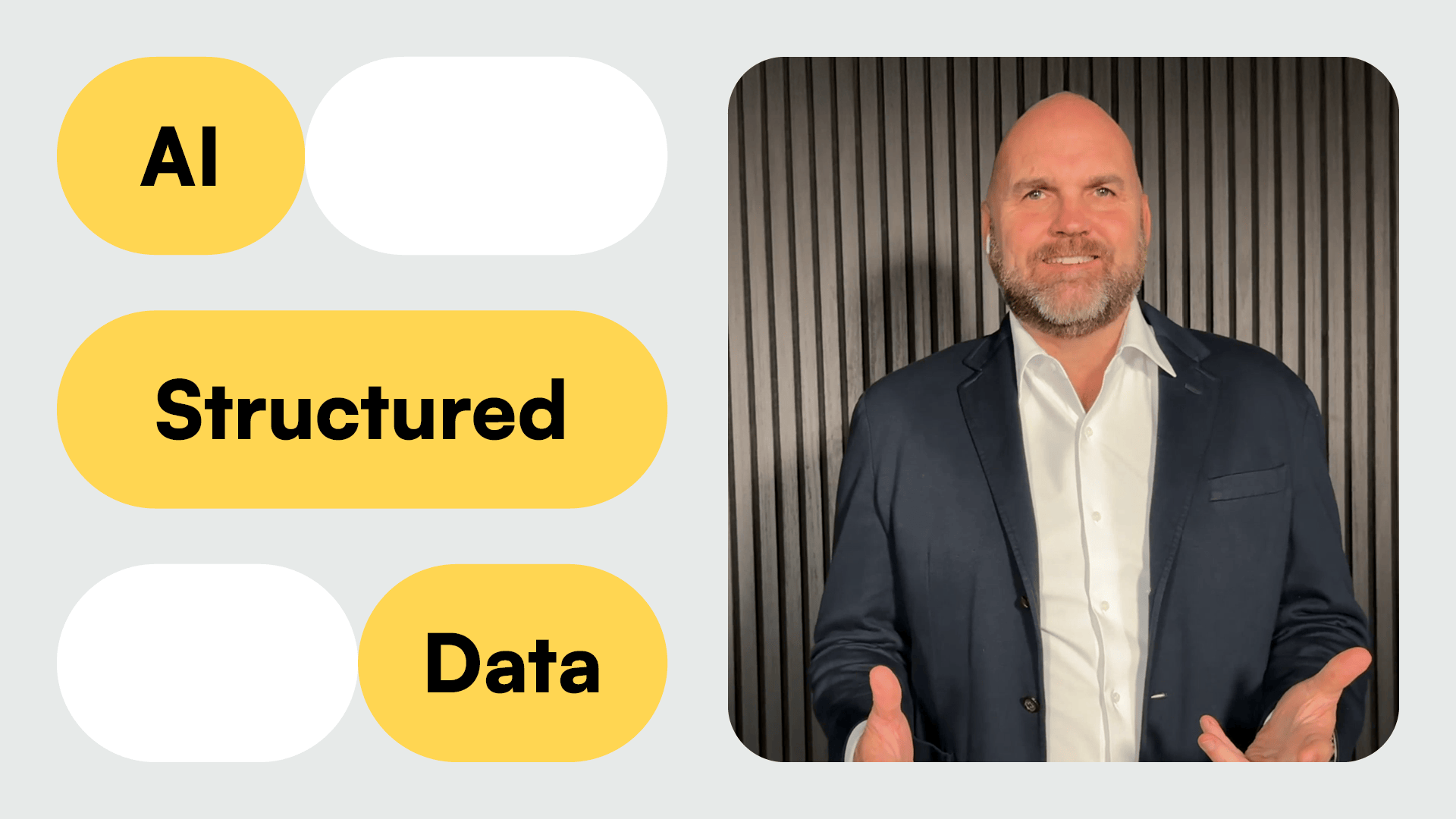
At Fleet APAC 2026, FleetGuru.ai Founder and Managing Director Eden Shirley took on one of the riskiest formats in conference presenting, a live AI demo and used it to make a compelling case that artificial intelligence can unify fleet maintenance operations across one of the world's most complex and fragmented regions.
His keynote, provocatively titled "Fleet Is a Universal Language. AI Is the Translator," argued that beneath the apparent chaos of APAC's many languages, systems, and standards lies a surprisingly consistent foundation and that AI is finally capable of bridging the gaps.
The Universal Language of Vehicles
Eden's premise is simple: every vehicle, in every country, has a license plate. From a plate, you can get to a VIN, and from a VIN to a model ID (MID) code, which unlocks service and repair data from every manufacturer. Scheduled maintenance intervals, inspections, repair procedures, DTC workflows, wiring diagrams, every manufacturer provides this information, and while coding systems and model variants differ between countries, the underlying data is universal.
The scale of FleetGuru's dataset illustrates the point. Across Australia and New Zealand alone, the company works with 46,000 MID codes, each carrying between 150 and 300 maintenance or repair operations somewhere between 6.5 and 14 million unique service and repair tasks, with associated labour times. Add an agreed fleet labour rate, parts costs, and markups, and the cost of any service or repair can be calculated in real time, without a human in the loop.
The Unstructured Data Problem
The harder challenge, Eden argued, is that much of fleet maintenance still runs on unstructured data: phone calls, faxes, emails, and text messages, flowing between service providers and fleets that all run different software. Traditional systems struggle with this material because it's context-dependent, duplicative, and impossible to force into a predefined schema.
Large language models can interpret that human context brilliantly but with a catch. Ask an LLM the same question three different ways and you'll get three slightly different answers, which is unacceptable in operations as critical as fleet maintenance and compliance. FleetGuru.ai's answer is RAG-enabled AI: combining the contextual intelligence of an LLM with controlled, structured data to deliver predictable, repeatable, accurate outcomes.
Introducing Mic: The AI Co-Pilot
The centrepiece of the keynote was Mic, FleetGuru.ai's Maintenance Intelligent Co-pilot. An AI agent trained on the full history of the AutoGuru and FleetGuru platforms: 3.4 million online transactions, $1.2 billion in services and repairs, 180,000 labour rate changes, and two billion part price changes from 12,800 approved fleet repairers, accumulated over 15 years.
In the first live demonstration, Eden played the role of a service provider phoning in a work order. Mic took a registration number, identified the vehicle as a 2018 Isuzu MU-X 4WD wagon with a three-litre diesel engine, confirmed the requested services, captured the odometer reading, priced the job, and submitted it through FleetGuru for authorisation, all by voice.
Then came the showstopper. Claiming fluency in 77 languages, Mic handled a second booking that began in Japanese, with audience member Kota lodging a service request for a Toyota Yaris before switching seamlessly to French mid-conversation to complete the authorisation. The point was unmistakable: language barriers, one of the biggest friction points in running maintenance operations across APAC, may simply cease to matter.
From Translator to Cost Controller
Eden then switched hats, playing a fleet manager overseeing 850 vehicles. Mic surfaced twelve quotes flagged as outliers, starting with a brake pad part on a 2021 Iveco Daily quoted at $191.40 against a peer median of $162.23 across 860 similar jobs. He flagged a labour line on a Hino 300 Series running roughly an hour against a peer median under 50 minutes, and a refrigeration unit repair priced about 30% above the median, demonstrating coverage beyond road vehicles into trailers, generators, and plant equipment. Total exposure across the twelve flagged jobs: about $400 above benchmark.
Small numbers, perhaps, but as Eden noted, those were just the exceptions on a fleet of 850 vehicles, after auto-approval had already cleared the routine work. FleetGuru currently auto-approves 35% of jobs on average, with some customers reaching 70%. Scale that to fleets of 100,000 or a million vehicles, and the economics become transformative.
Scaling Global Fleet Intelligence
Eden closed by outlining FleetGuru's expansion ambitions, starting with Japan, where the company is already building the digital dataset to replicate its Australian and New Zealand operations. The longer-term vision is a universal data layer enabling centralised, multilingual maintenance hubs serving global fleets, much as Malaysia and the Philippines transformed booking operations for the tourism industry.
Asked whether AI agents like Mic would eventually make roles in fleet management disappear, Eden was emphatic that the technology exists to amplify people, not replace them. "The human is the trust layer," he said. “Fleets are complex, high-value, high-risk asset pools, and you can't sue the code. Humans will absolutely stay in the loop. The real question becomes whether one person can confidently manage a thousand vehicles or a hundred thousand.”
Shirley offered his own business as the proof point. Far from cutting headcount as AI took on more of the workload, FleetGuru has doubled its staff and is investing twice as much while delivering two to three times the output of a year ago.
The takeaway from Fleet APAC 2026 was clear. The problems of cost and compliance are the same in every market and for the first time, so is the solution.







.png)






.png)